
Early Fall Striper Fishing on Lake Texoma: What's Biting Now
Thank you for contacting us.
We’ll get back to you as soon as possible.
We got it.
The mornings have finally turned. That first real cool snap along US-70 means one thing on Lake Texoma: the stripers are done sulking in deep water and starting to feed hard again. Early fall is one of the most underrated windows on this lake, with less boat traffic than summer, cooling water that pushes baitfish shallow, and fish that are actively hunting instead of hiding. If you have been waiting for the right week to get back on the water, this is it.
Why Lake Texoma Fishes Differently Than Most Lakes
Lake Texoma sits on the Oklahoma-Texas border and holds the only self-sustaining striped bass population in the state of Texas. Stripers are not native to freshwater lakes at all, and most inland fisheries have to restock them year after year. Texoma is different because the Red River carries heavy natural salt deposits into the lake, remnants of an ancient seabed that once covered this part of the country. That salinity is enough to let a fish built for saltwater actually reproduce here on its own. It is part of why anglers drive hours to fish this particular lake instead of the reservoir closer to home, and it is the kind of detail that makes a fishing trip here feel a little different than an ordinary weekend on the water.
Why Early Fall Flips the Switch
All summer, Lake Texoma's stripers hold deep near the thermocline to escape the heat. As surface temperatures start dropping through September, that layer breaks down, and baitfish scatter toward shallower water and creek mouths. Stripers follow the food, and the result is more predictable, more aggressive fish than you will find in July or August. Surface temperatures are cooling into the mid-70s and dropping further each week, shad schools are pushing into coves and creek arms, and the boat traffic that made summer weekends feel crowded has already started to thin out.
Where the Stripers Are Right Now
The Red River arm is worth checking first this time of year. Cooler water flows in from the river and baitfish stack up in the current breaks, pulling stripers in behind them. Fish the seams where moving water meets still water, since that is where baitfish get disoriented and become easy targets for anything hunting them.
Near Denison Dam, deep water is still close by, so fish can move shallow to feed and retreat fast if conditions change. This makes it a reliable early-fall spot when you are not sure where else to start, and it holds up even on windy days when the main lake gets choppy and harder to fish comfortably.
Mid-lake coves and creek mouths also start producing well once water temperatures drop into the 70s, especially in the early morning and late afternoon. Look for coves with some depth nearby rather than shallow, featureless flats, since stripers still want a quick path back to deeper water once they have fed.
Best Times to Fish This Time of Year
Early fall does not demand the pre-dawn wakeups that summer does. Fish are willing to feed through a wider window now, which makes this a friendlier season for families or anyone who would rather not be on the water at five in the morning. The first two hours after sunrise remain the most reliable stretch, when fish are actively working the surface, and the last hour before sunset can be just as productive, especially on overcast days. Midday can still produce results near the dam if you are willing to fish deeper structure, and cloudy or slightly breezy days tend to extend the feeding window across the whole day rather than concentrating it into a short burst.
Gear and Bait for the Transition
Topwater lures earn their keep during early morning surface activity, while swimbaits and slab spoons cover suspended fish holding near the dam. Live shad is worth the effort if you can net or buy it locally, since baitfish are actively schooling and stripers are keyed in on exactly that kind of forage. A medium-heavy rod matters more this time of year than people expect, because even an average-sized striper pulls hard once the water cools, and a landing net sized for something bigger than you are used to is a smart addition, since fall fish often run larger than what you caught in July.
Common Mistakes Anglers Make This Time of Year
Even experienced anglers get caught fishing summer patterns into fall. The most common mistake is staying too deep for too long, well after the fish have already moved up to feed. If you are marking bait on your fish finder in twenty feet of water but nothing near the surface, do not assume the stripers left the area. Check shallower water nearby first, especially near current breaks and creek mouths, before writing off a spot entirely. Another common miss is fishing too fast. Cooling water slows fish metabolism slightly compared to peak summer heat, so a slower retrieve on swimbaits and slab spoons often outproduces a fast, aggressive one, even when everything in you wants to speed up because the conditions feel so good.
Reading the Signs: Birds, Bait, and Surface Activity
Fall fishing on Texoma rewards paying attention. Diving gulls and terns over open water almost always mean stripers are pushing shad to the surface underneath them. If you see that kind of surface activity, close the distance quietly and get a topwater lure in front of it fast, because these feeding windows can be short, sometimes just a few minutes. Having a rod already rigged and ready matters more than having the perfect lure when a window like that opens up in front of you.
A Good Season for Family Fishing Trips
If you are introducing kids to fishing, early fall is a forgiving time to do it. The wider feeding windows mean less pressure to be out at sunrise, and milder temperatures make a few hours on the water more comfortable for everyone, not just the person holding the rod. It is one of the easier seasons on this lake to turn a fishing trip into something the whole family actually enjoys rather than endures.
Make Lake Texoma Your Weekly Ritual, Not a One-Time Trip
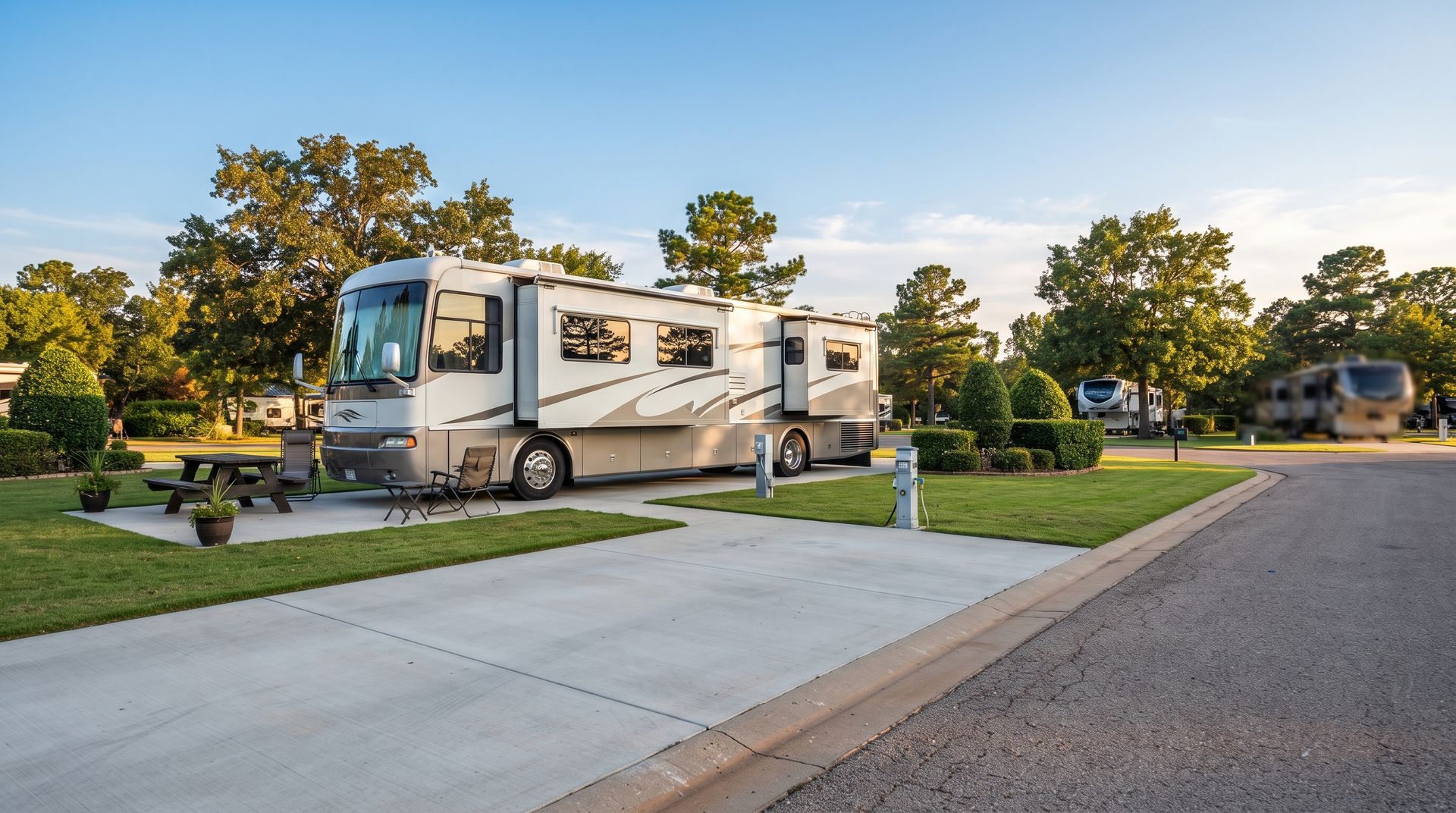
A lake this good deserves more than a single weekend a year, and that is a lot easier to manage when your rig has a real home base nearby instead of a cramped overnight stop you have to break down and rebuild every time you want to fish a new pattern. At Hilltop, all 79 sites sit on oversized 14 by 60 foot concrete pads, so backing in and getting parked never eats into
time you could be spending on the water. Full hookups on both 30 and 50-amp service mean you are settled in immediately, and the grass yard at every site gives you room to clean a catch, fire up the grill, and unwind after a good day chasing stripers.
Plan Your Next Trip
If early fall striper fishing has you ready to get back on Lake Texoma, the easiest next step is locking in a site before the season's best weeks fill up. Call 580-745-9180 or email officehilltop25@gmail.com, or book directly through the CampLife platform, to plan your stay at Hilltop RV Resort.
Back to Blogs
Contact Us
Recent Posts