Something bigger than a weekly pattern shift is now underway on Lake Texoma. As water temperatures keep falling, baitfish are not just drifting into new coves, they are migrating in earnest, pushing up the lake's major arms in numbers that pull stripers with them. Understanding this migration, not just this week's hot spot, is what separates anglers who stay on fish all fall from anglers who are always a step behind.
What's Actually Happening Right Now
Shad spend summer scattered across the lake, but falling water temperatures trigger a real migration instinct. Baitfish start moving toward the backs of creeks and up the major river arms, following comfortable oxygen levels and, eventually, their own spawning and wintering instincts. Stripers, which spend all year keyed into baitfish location, follow that migration closely. This is not a single event but a weeks-long process, and where the bait is today is genuinely different from where it was two weeks ago and where it will be two weeks from now. The pace is not constant either, a stretch of stable, mild weather can slow the push for days, while a sharp cold front can trigger a jump in how far the bait has moved by your next trip. Think of it less as a single event and more as a rolling wave that stalls in places and occasionally surges.
Why Water Temperature Triggers the Move
It helps to understand the why behind this migration, not just the where. Shad are more sensitive to water temperature swings than the predator fish that eat them, and as surface water cools, they instinctively seek out water that keeps them comfortable and keeps their food source, plankton, concentrated. That search pushes them toward the upper ends of river arms and the backs of major creeks, where incoming water and shallower depths cool and warm faster than the open lake. Stripers do not need to sense the shift themselves, they simply follow the food, which is why finding the baitfish means finding the stripers.
Reading the Migration Corridors
The Red River and Washita River arms are the two primary migration corridors on Texoma, and both are worth watching closely through this stretch. Baitfish tend to move up-lake in these arms as temperatures drop, using current and cooler incoming water as a guide. Pay attention to how far up each arm the bait has pushed on a given week, since that tells you roughly where to start looking for stripers, and do not assume the same stretch that produced two weeks ago is still holding fish now. The two arms do not always move in step either, one can see a strong push of bait while the other stays quiet for a week or two, often due to small differences in water clarity or current. Splitting your time between both across a few outings gives you a better read on which corridor is actually holding the more active migration.
The Backs of Creeks Versus the Main River Channel
Within each major arm, the migration does not move as one uniform block of water. Baitfish often stage first in the secondary creeks and coves that feed into the main channel before pushing further up the primary corridor. These smaller pockets can hold concentrated bait and feeding stripers even when the main channel looks quiet. Treat every creek mouth along the Red River and Washita River arms as a potential checkpoint rather than only fishing the main channel, since a smaller tributary holding fresh bait can outproduce the main arm on a given day. Idle through these creek mouths with your electronics on before running further upriver, a quick check can save you from passing fish staged closer than expected.
Temperature Bands Worth Tracking
Rather than fishing a single spot out of habit, track the temperature band where you are actually marking bait and fish activity. As the whole lake cools, that band shifts gradually up-lake and into shallower water. Note the surface temperature every time you're out, not just the spot, and look for consistency in what temperature range is producing activity rather than a specific GPS pin. This matters more during migration than at almost any other point in the season, since the fish are actively relocating rather than holding in one area for weeks at a time. Keep a simple log across your trips, even something as basic as jotting the surface temperature and roughly how far up an arm you found active fish, and over a few weeks that record starts to reveal a pattern specific to this season, since Texoma's cooling pace varies year to year.
Watching the Migration Through Your Electronics
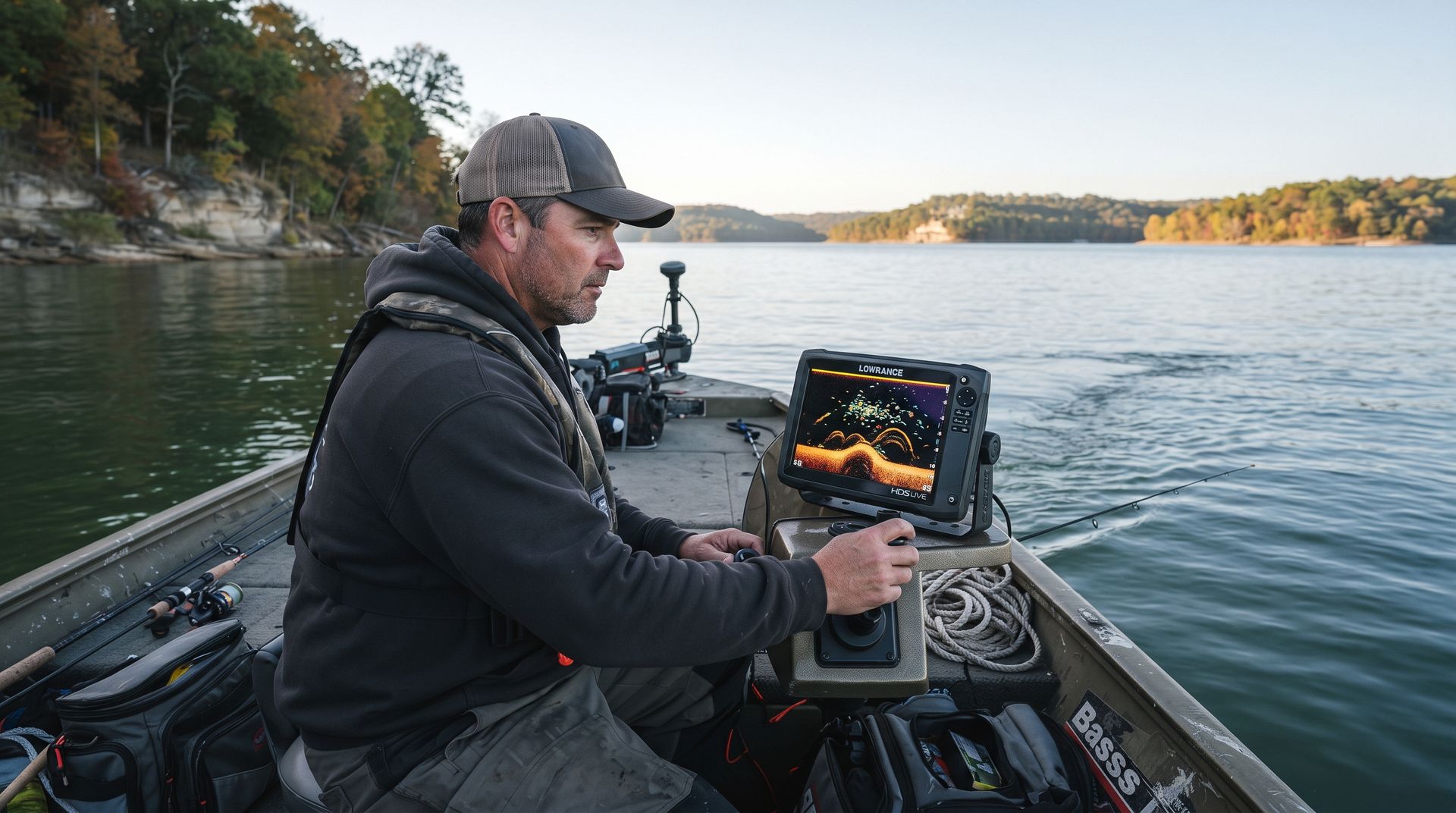
Your fish finder tells a more useful story during migration than during a stable pattern. Large, loosely organized bait balls moving through open water often indicate fish actively migrating rather than holding, while tight, structured schools sitting near cover suggest fish that have settled into a temporary feeding area. Marking the same general bait activity in a new location from one trip to the next is a clear signal that the migration is actively progressing, and it is worth adjusting your search area rather than returning to last week's spot out of habit. Pay attention to depth as well as location, since relocating fish often suspend at different depths than fish settled into a stable pattern, and a school sitting noticeably shallower or deeper than last week is another clue the migration has shifted. Marking only scattered, isolated fish rather than a real concentration is often a sign you are between pushes, and worth running further up or down the arm.
Birds Are Your Best Early Warning System
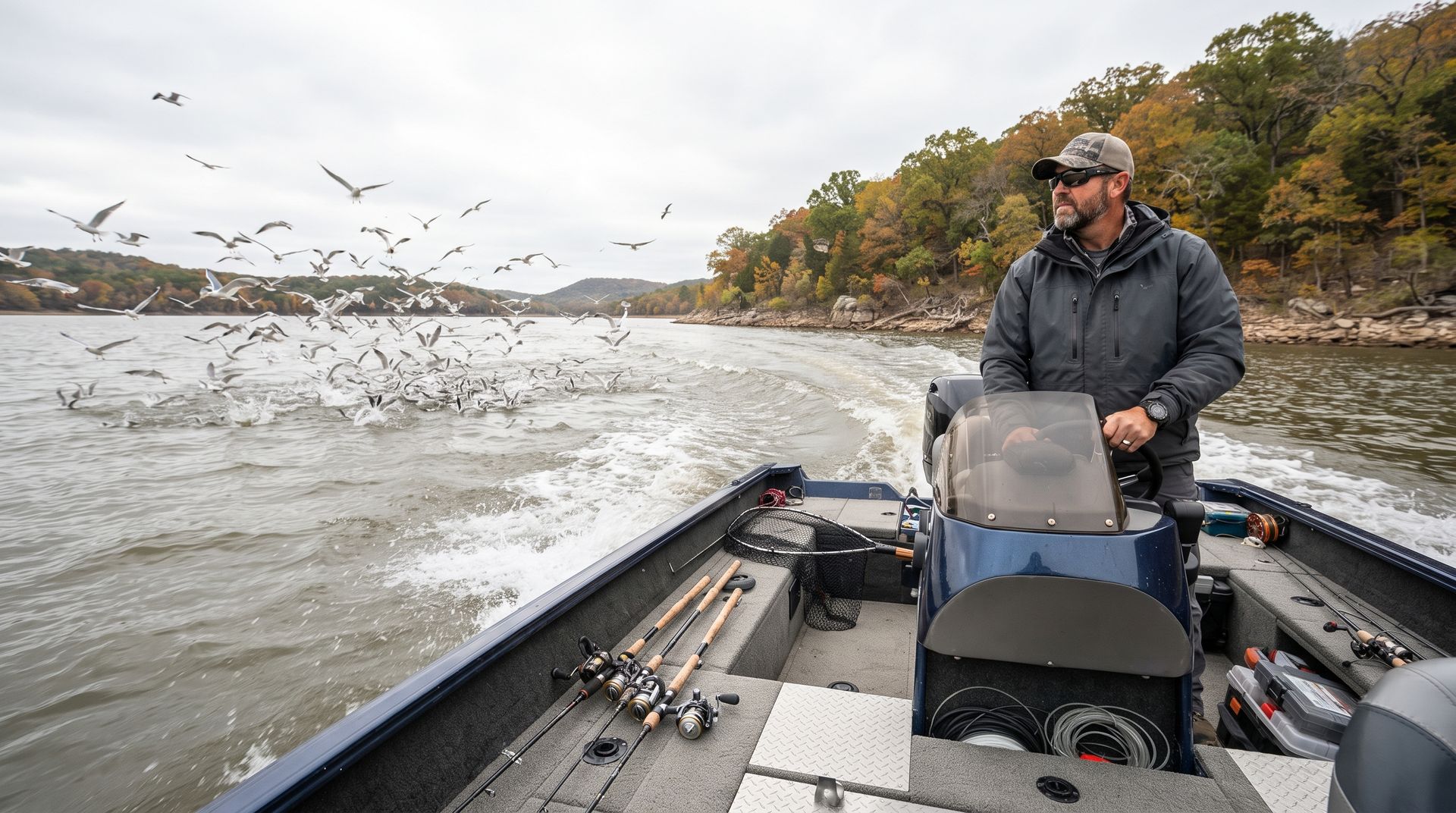
Diving gulls and terns are especially valuable during migration weeks, since they often locate moving bait schools before anglers do. A sudden cluster of diving birds in a stretch of water that was quiet last week is one of the fastest ways to catch up to where the migration has actually moved. Keep your eyes up as much as your electronics down during this stretch, since surface activity can develop and disappear fast as bait keeps moving. Not all bird activity means the same thing either, a handful of gulls circling and occasionally dipping usually points to a smaller, scattered pod of bait, while a large, tight, repeatedly diving flock signals a concentrated school worth stopping for. Location matters too, birds close to shore in the back of a creek often indicate bait that has pushed shallow, while birds out over open water in the main arm point toward fish still migrating through deeper water.
A Common Mistake During Migration Weeks
The single most common mistake anglers make this time of year is treating a spot that produced fish last week as a sure thing this week. Loyalty to a stretch of bank or a creek mouth makes sense during a stable summer pattern, but during active migration it can cost you an entire outing. If a spot that produced consistently a week or two ago shows nothing on your electronics after a reasonable look, the more productive move is almost always to keep running rather than keep working that same water out of habit. Give any one stretch a fair but limited amount of time, then let this week's bait activity, not last week's memory, decide where you fish next.
Adjusting Tactics for Moving Fish
Fish that are actively migrating behave differently than fish holding in an established pattern. They tend to feed opportunistically as they move rather than settling into a predictable daily rhythm, which means covering water matters more right now than working a single spot patiently. Be willing to run multiple stretches of a river arm in a single outing, and keep a range of retrieve speeds in rotation, since migrating fish can be aggressive one day and more deliberate the next depending on how far they have pushed. Lure selection benefits from the same flexible approach, keep a mix of search baits that cover water quickly alongside something more subtle, and switch presentations mid-outing if the first approach is not drawing strikes. Noting what produced on a given day helps you adjust faster next time out, since the fish's mood can shift week to week just as much as their location does.
What to Check Before You Head Out
A little preparation goes a long way when you may end up covering more water than usual. Fuel up fully before you leave the dock, since chasing a migration often means running longer distances than a settled pattern requires. Mornings are cooling noticeably now, so pack an extra layer you can shed once the sun is up, and keep a rain jacket within reach since fall weather on Texoma can shift quickly. Check your electronics before you leave, since the first temperature reading of the day sets the baseline for everything you track that outing.
Why This Window Is Worth the Extra Effort
Migration weeks can feel less predictable than a settled pattern, but they also produce some of the best fishing of the fall once you find where the movement has concentrated. Fish are actively feeding to fuel the transition, and locating a fresh push of bait often means finding fish that have not been pressured yet. The extra effort of tracking the migration properly, rather than fishing memory from a few weeks ago, is usually rewarded.
Home Base for a Moving Pattern
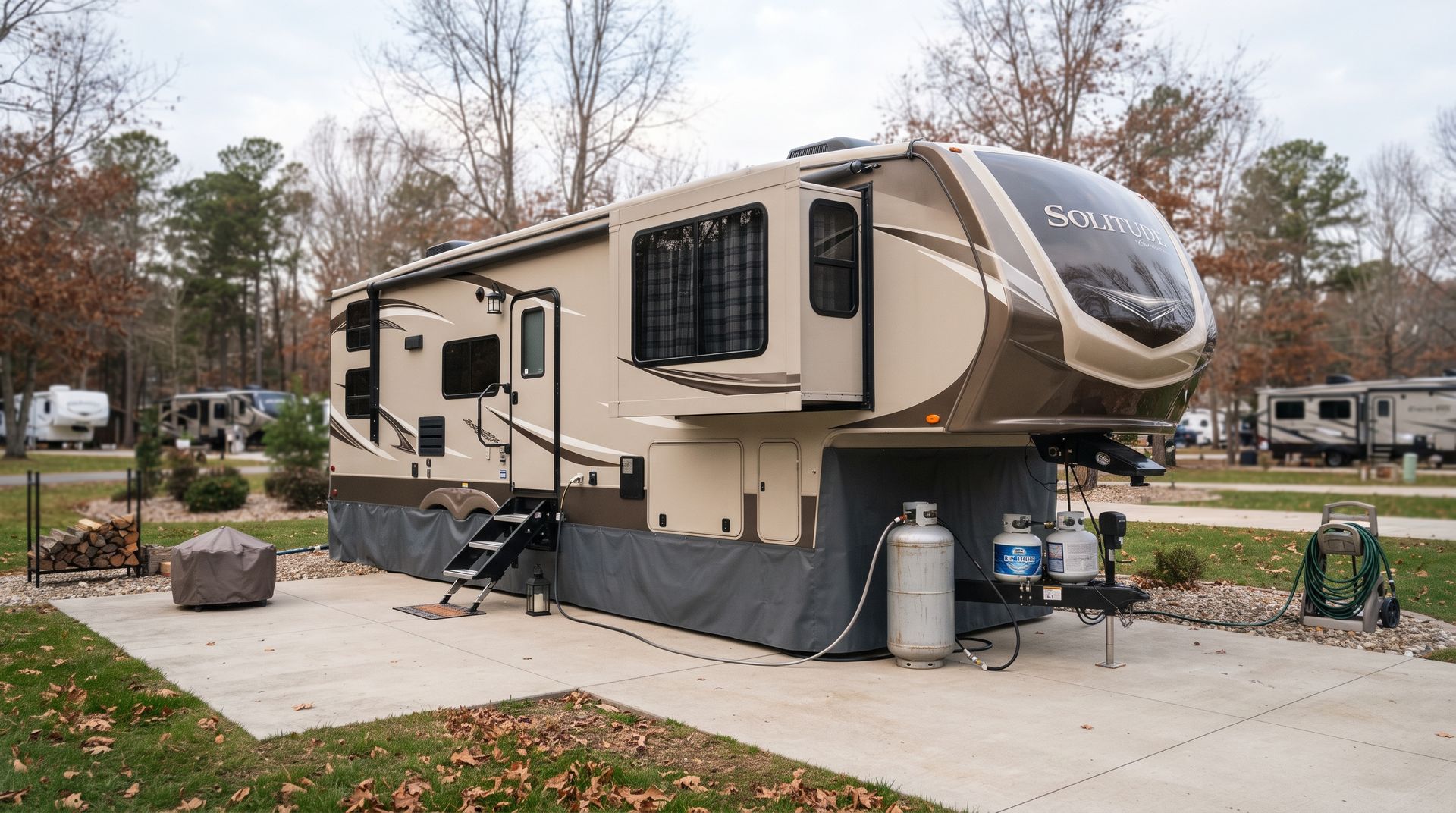
Chasing a migration means you need to move when the fish move, and that is a lot easier without breaking down a full campsite every time. At Hilltop, our 79 sites sit on oversized concrete pads, so getting parked never slows you down, and full hookups mean you are settled in immediately whether you are heading out for a dawn run up the Red River arm or a late afternoon check up the Washita. The grass yard at every site gives you room to prep gear and clean a catch before heading back out to track the next push of fish.
Stay on the Migration All Fall
The fall migration on Lake Texoma rewards anglers who can adapt quickly and get out often.
Call 580-745-9180 or email
officehilltop25@gmail.com, or book directly through the CampLife platform, to reserve your site at Hilltop RV Resort and stay close enough to fish it as it happens.