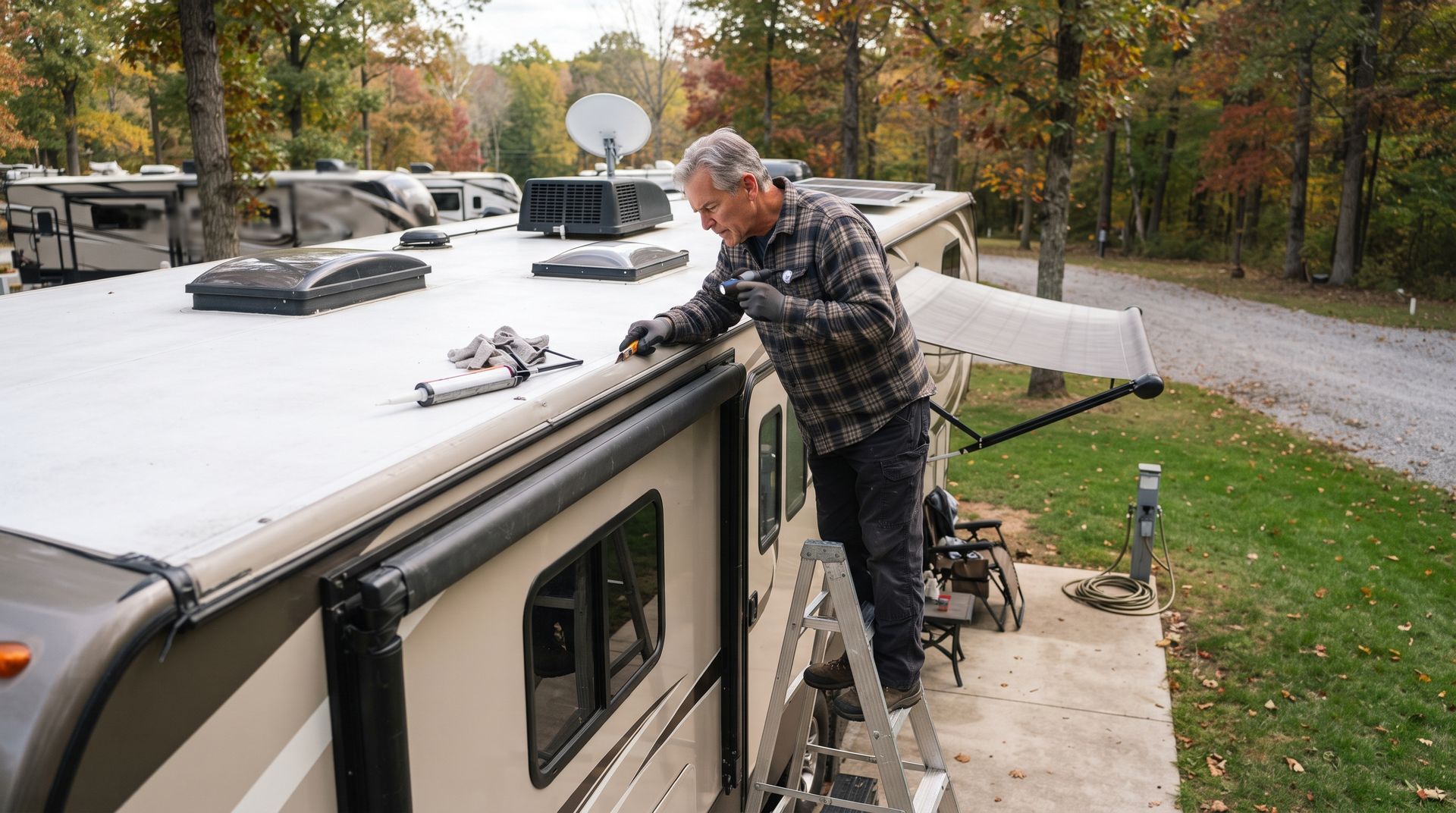
The heat has finally broken along US-70, and that is your cue. Fall is the best window all year to get ahead of RV maintenance, before the first freeze forces your hand and before small issues turn into cold-weather emergencies. Here is a real checklist you can actually work through this month, not a vague list of good intentions.
Why This Checklist Matters More Than It Seems
A lot of RV owners treat maintenance as something you do when something breaks. That works fine in summer, when a minor issue is an inconvenience. In freezing temperatures, the same minor issue, a cracked seal, a weak battery, a slow leak, can turn into a repair bill or a genuinely uncomfortable night. Fall maintenance is not about being extra cautious. It is about doing the easy version of a job now instead of the hard, cold, urgent version of it later, when parts and technicians are harder to come by and the weather makes every task less pleasant.
Exterior Checks: Start From the Top
Your roof and seals take the most abuse all year, and summer sun accelerates wear you cannot always see from the ground. Inspect roof seams and seals for cracking or separation from summer heat exposure, check window and door seals for gaps that will let cold air in later, and look over your awning fabric and hardware, since a torn or loose awning gets worse fast in fall wind. Exterior caulking around vents, antennas, and slide-outs deserves a close look too. A short walk-around with a flashlight catches most of this. If you find a small crack in roof sealant, it is a five-minute fix now and a bigger job once water gets underneath it.
Systems Checks: Furnace, Water Heater, and Batteries
These are the systems you will actually depend on once temperatures drop, so this is not the year to assume they are fine. Test your furnace for a full heating cycle and listen for any unusual noise or smell, check your water heater's function and look for signs of leaking or corrosion, and test battery charge and connections, since cold weather reduces battery performance significantly. Confirm your carbon monoxide and propane detectors are working, especially before you are relying on heat overnight, since that is not something you want to discover is broken on the coldest night of the season.
Tires and Undercarriage
Tires lose pressure as temperatures drop, and a tire that was fine in August can be underinflated by October without you doing anything wrong. Check tire pressure against the manufacturer's cold-weather recommendation, look over tread wear and any sidewall cracking from summer sun exposure, and inspect undercarriage components for rust or loose fittings, especially if you have been parked in one spot for a while. If you are planning significant driving before winter sets in, it is also worth checking your wheel bearings while you are already under there.
Deciding on Skirting
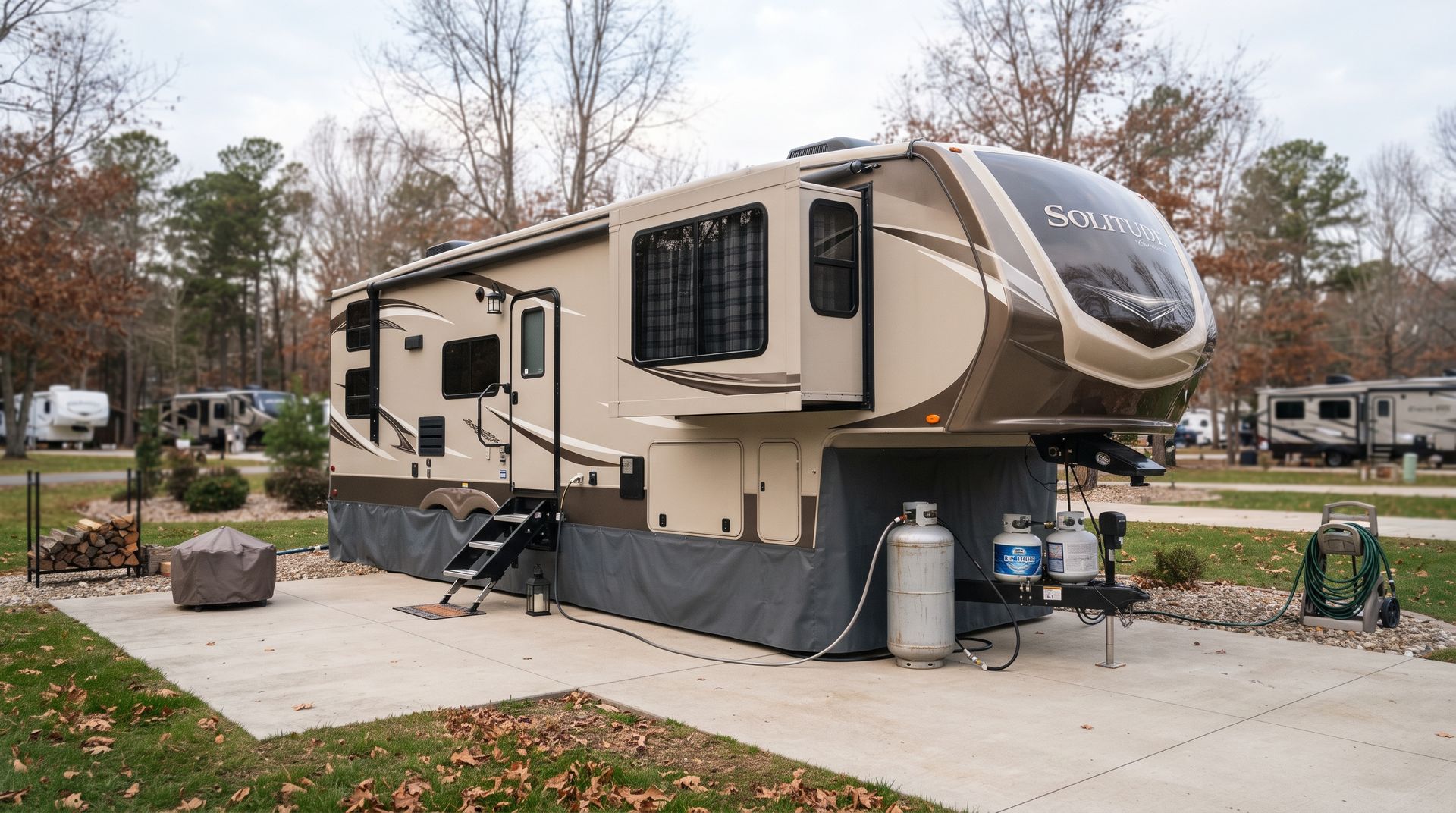
If you are staying through real winter weather, skirting is worth planning for now rather than scrambling for it during the first cold snap. It protects your underbelly and plumbing from wind chill and can meaningfully cut your propane usage over the course of a season. Even a simple, temporary skirting setup beats none at all once temperatures drop into the thirties overnight, and putting it up while the weather is still mild is a much easier job than doing it in a cold wind.
Don't Skip the Interior
Exterior work gets most of the attention, but a few interior checks matter just as much once the temperature drops. Check weatherstripping around interior doors and cabinet vents, feel for any drafts near windows on a breezy day, and confirm smoke detector batteries are fresh, since you will be running more heat sources through fall and winter. Storage areas are worth a look too, for anything that could freeze or crack if left out overnight during a cold snap.
A Simple Month-by-Month Approach
You do not need to do all of this in one weekend. This month, focus on exterior seals, roof inspection, and the awning check. Over the next few weeks, work through the furnace test, water heater check, and battery testing. Before the first hard freeze, make your skirting decision, check tire pressure, and stock up on propane or a backup heat source.
Common Mistakes Worth Avoiding
The most common fall maintenance mistake is waiting for a cold night to test the furnace for the first time. If something is wrong, you find out at the worst possible moment. The second most common mistake is assuming a park with full hookups means you do not need to think about any of this. Hookups keep you comfortable, but they do not replace basic seasonal upkeep on your own rig, and the two things solve different problems entirely.
Why Your Site Matters as Much as Your Checklist
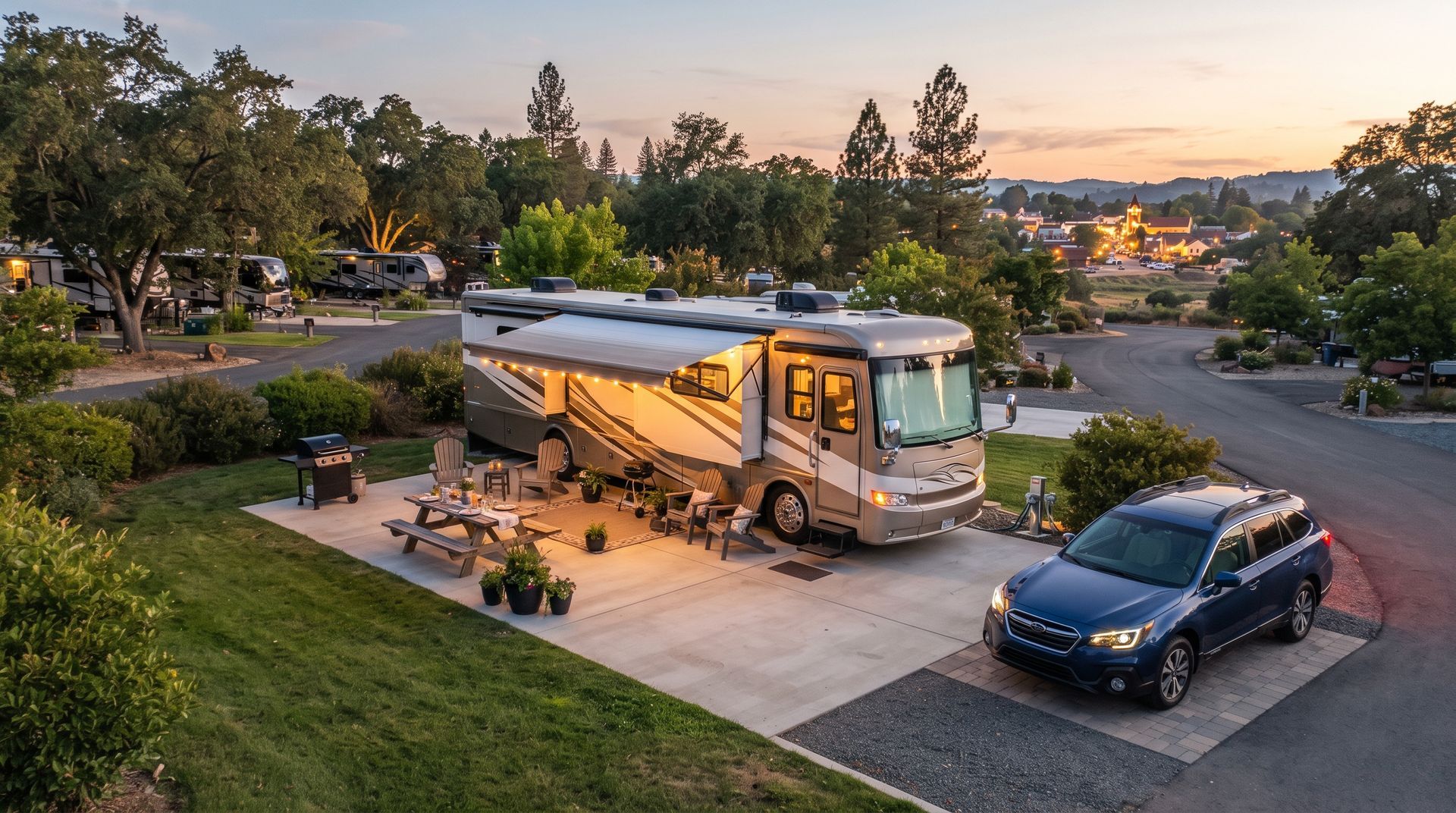
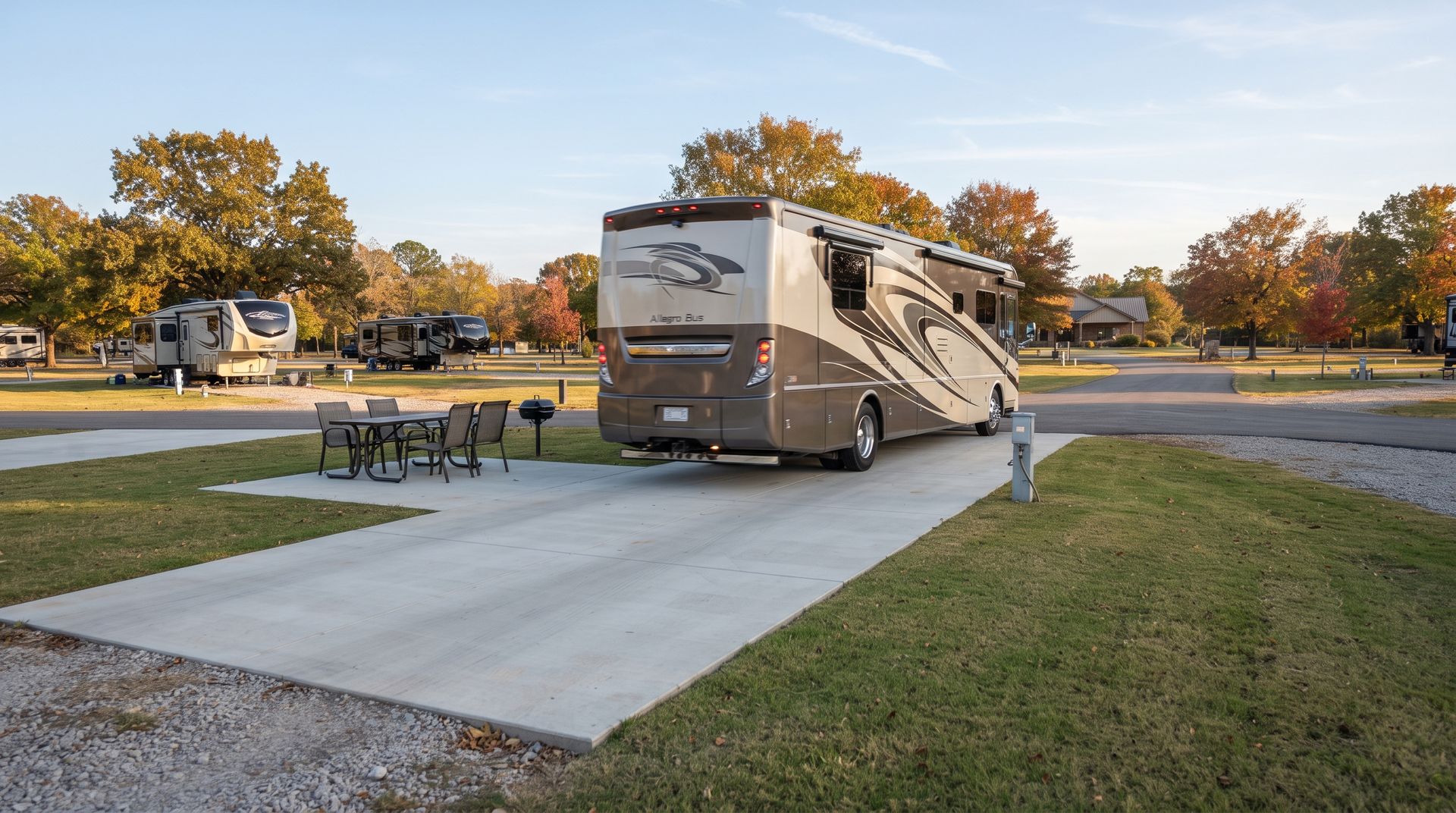
A good maintenance routine works a lot better when your site is not fighting you. At Hilltop, all 79 sites sit on oversized 14 by 60 foot concrete pads, so your rig stays stable through the fall and into winter without repeated releveling as the ground shifts with the weather, which takes one more variable off your maintenance list entirely. Full hookups on 30 and 50-amp service mean your water and power stay reliable without extra workarounds, and the grass yard at every site gives you room to actually do this kind of maintenance work without feeling boxed in between neighbors. None of this needs to happen in one exhausting day. Work through it a section at a time over the next few weekends, and you will be genuinely ready well before the first real cold front arrives.
Get Ahead of Winter Before It Gets Here
Fall maintenance is easiest to do at a site that is already stable and set up right. If you are staying through the colder months, now is the time to lock in your spot. Call
580-745-9180 or email
officehilltop25@gmail.com, or book directly through the CampLife platform, to reserve your site at Hilltop RV Resort.