Deciding to stay put for the whole winter is a different commitment than a fall visit that happens to run long. Once you know you are staying through the season, a handful of planning decisions are worth making early, while you still have time to think them through instead of scrambling once the cold actually arrives. None of this has to be complicated, but it does need to happen before the first hard freeze rather than during it. Here is what to actually plan for before you settle in.
Committing to a Season Changes the Math
A weekend or even a month-long stay lets you get away with some improvising. A full winter season does not. The small inefficiencies that are easy to ignore on a short stay, an underinsulated underbelly, an inconsistent mail plan, an unclear budget, compound over three or four months into real problems. Planning for the season up front, rather than adjusting on the fly, is what makes a winter-long stay comfortable instead of something you are just enduring. Think of it less like packing for a trip and more like setting up a temporary home, because for the next several months that is exactly what your rig is. A little extra effort in October and November tends to pay for itself many times over by January, when the temptation is to just deal with problems rather than fix them properly. It also helps to write your plan down rather than keep it all in your head, since a simple checklist is much easier to work through calmly in the fall than to reconstruct from memory during a cold snap.
Decide on Real Cold-Weather Protection
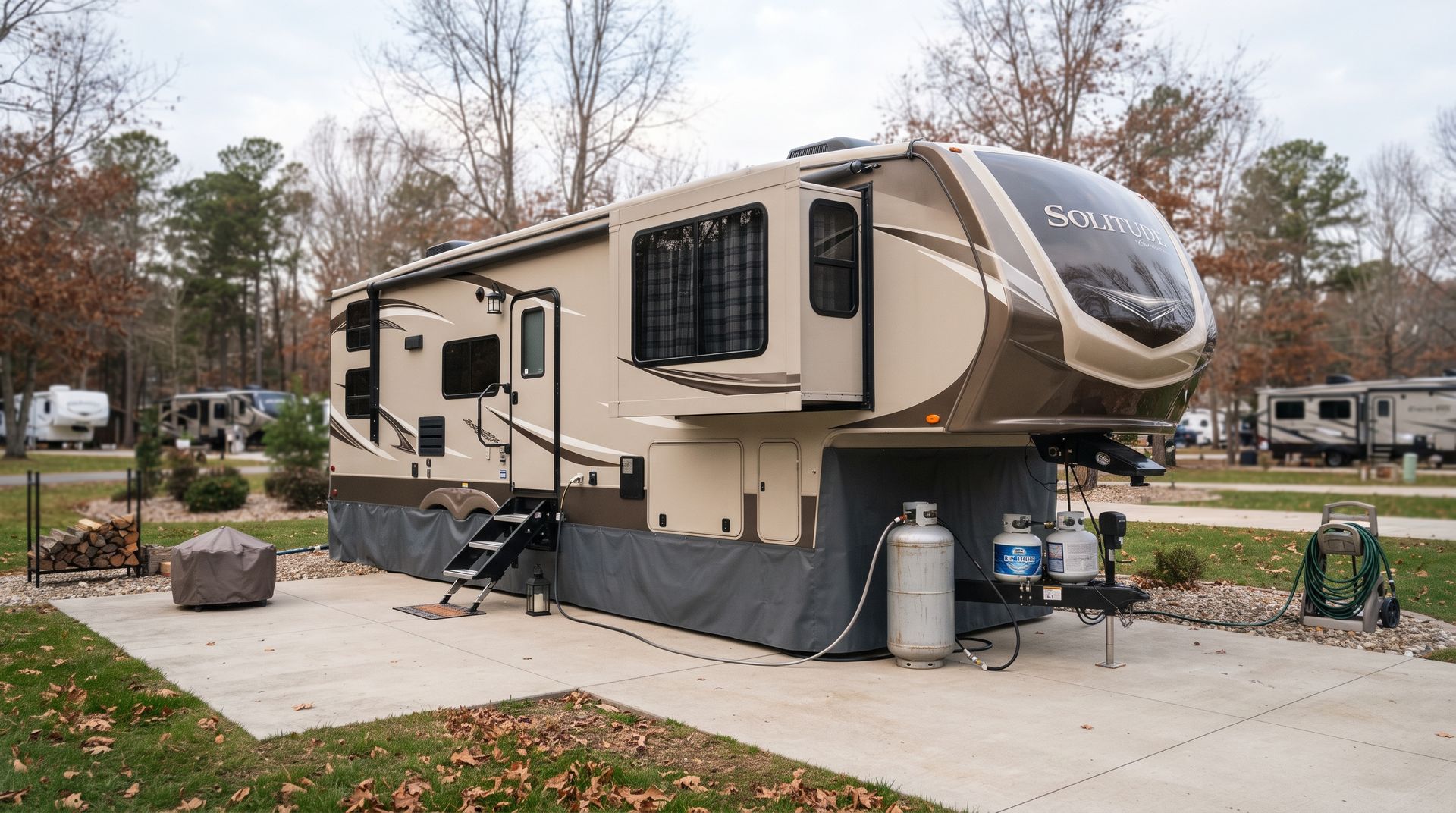
If you are committing to the season, it is worth doing skirting properly rather than improvising something temporary. Real skirting protects your underbelly and plumbing from sustained cold in a way a quick fix cannot, and it meaningfully reduces how hard your furnace has to work over months of use rather than just one or two cold nights. Pair it with a plan for your water lines specifically, since a short cold snap and a full winter of freezing temperatures call for a different level of protection.
Don't Stop at the Underbelly
Skirting handles the space underneath your rig, but a surprising amount of winter heat loss happens at eye level instead. Windows, skylights, and vents are often the weakest points in an RV's insulation, so it is worth adding thermal curtains, reflective window covers, or even simple foam board cut to fit during the coldest stretches. Check the weatherstripping around your entry door and slide-outs early in the season, since a thin gap that barely mattered in October can turn into a real draft once temperatures drop for good. Heat tape and pipe insulation on any exposed water lines are worth having on hand before you need them rather than ordering them in a panic when a line already feels close to freezing. A simple skirting job paired with attention to these smaller gaps usually does more for your comfort and your furnace's workload than either fix on its own.
Plan Your Heat Source Strategy
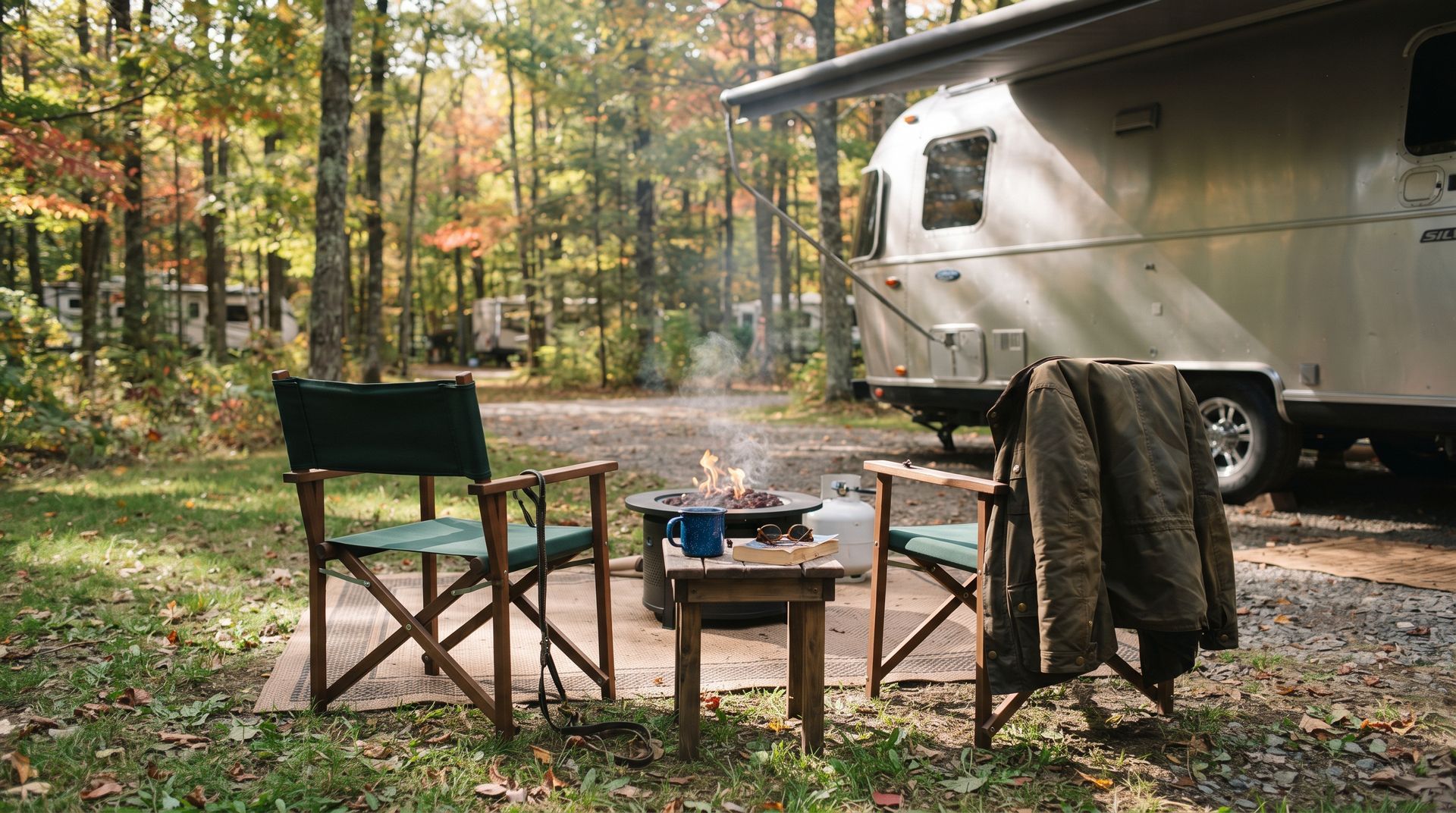
Relying on a single heat source for an entire winter season is risky, so it is worth having a real backup plan rather than hoping your furnace runs flawlessly for months straight. Decide whether you will supplement with a space heater for smaller areas, have a plan for what happens if your primary furnace needs service mid-season, and think through your propane supply chain, how often you will need to refill, and whether that is easy to manage from where you are staying. If you plan to run a space heater regularly, make sure it is rated for the space and never left running unattended overnight, and pair any supplemental heat source with a working carbon monoxide detector, since that is one safety step that is easy to overlook once you settle into a routine. It is also worth having a rough sense of how many degrees a space heater actually buys you in your specific rig, since that number varies a lot depending on insulation and layout, and testing it on a mildly cold night is better than finding out on the coldest night of the season.
Watch the Forecast, Not Just the Calendar
A full winter season is really a series of individual cold events strung together, and treating them that way makes the whole season more manageable. Get in the habit of checking the extended forecast a few days out rather than just reacting to the temperature outside your door each morning, since that gives you time to top off propane, double check your skirting, or bring in anything that should not freeze before a hard cold snap actually arrives. The coldest nights of a season are usually the ones where wind is part of the story as much as temperature, so pay attention to wind chill and not just the number on the thermometer when you are deciding how much extra protection a given night calls for. A little bit of weather awareness spread across the season is far less stressful than trying to catch up all at once when a serious cold snap shows up with only a day or two of notice.
Handle the Logistics Before You're Settled
A few administrative pieces are much easier to set up before you are three months into the season. Get your mail forwarding service set up and confirmed working before you actually need it, since testing it early beats finding out it failed in December. If you work remotely, confirm your internet and cell service will actually hold up for the whole season, not just the week you checked. It is also worth thinking through vehicle registration, insurance, and any state-specific requirements tied to an extended stay, since these are easier to handle with time to spare than as a last-minute scramble, and it is worth looking into what applies to your particular situation well before you need the answer. Beyond mail and connectivity, take a few minutes to think through package deliveries for the season, since online ordering tends to pick up once you are settled somewhere for months rather than weeks, and confirm how prescriptions or other recurring needs will be handled from your winter location. Sorting these pieces out in the first week or two, rather than letting them trail behind you, frees up the rest of the season to actually be about enjoying where you are.
Budget for the Whole Season, Not Just the Month
A full winter season costs differently than a short stay, and it is worth mapping that out ahead of time. Confirm your site rate structure for an extended stay, including whether weekly or monthly rates apply and what that actually includes. Build in a realistic estimate for propane, since usage climbs once you are running heat consistently for months rather than occasionally, and propane costs can swing depending on how cold the season actually turns out to be. A little planning here prevents the slow budget creep that catches a lot of first-time full-season stayers off guard. It also helps to set aside a separate cushion for the unexpected, a part that needs replacing, a tow if you get stuck somewhere unfamiliar, a repair that cannot wait until spring, rather than treating your season budget as though nothing will come up. Small recurring costs like laundry, extra grocery runs, or the occasional dinner out add up differently over four months than over four days, so it is worth budgeting for daily life and not just for the big-ticket items like site fees and propane.
Think Through the Social Side of Staying Put
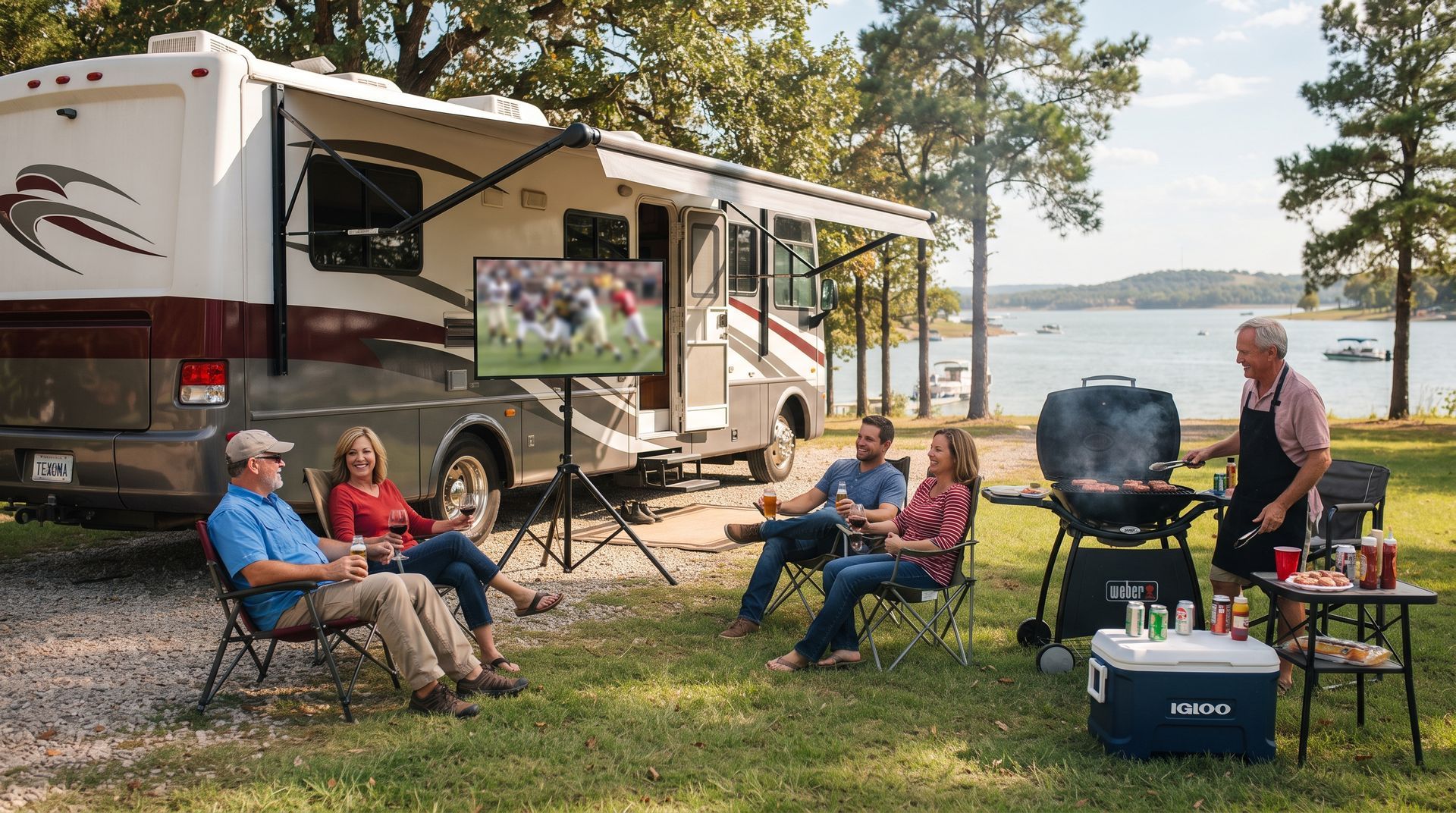
Full-time RVers who move frequently get built-in variety, new places, new people, a change of scenery every few weeks. Staying in one spot for a whole season trades that for stability, but it is worth being intentional about the tradeoff. Get to know your neighbors early in the season rather than staying isolated, take advantage of any community spaces or common areas your site offers, and plan a few short trips or day excursions throughout the winter so the season does not start to feel monotonous by February.
Pack for a Season, Not a Trip
What you bring for a long weekend and what you actually need for a full winter are two different lists, and it is worth going through yours before you arrive rather than after you are already cold. Beyond the obvious warm clothing, think about layers you can add or remove throughout the day, since indoor temperatures in a small space can swing more than you would expect between morning and evening. A few rugs or mats near the entry door help keep the cold floor and outside moisture from tracking through the whole rig, and a stock of basic repair supplies, spare fuses, sealant, a few common fittings, means a small fix does not turn into a multi-day project waiting on a part to arrive. If this is your first full winter season, it is worth erring on the side of overpacking for cold-weather basics rather than assuming you can pick up whatever you need locally once the season is already underway.
Mistakes First-Time Full-Season Stayers Make
A few missteps show up again and again with people wintering in an RV for the first time, and most of them are avoidable with a little foresight. Waiting until the first freeze warning to think about skirting or pipe protection is one of the most common, since by then you are working against the cold instead of ahead of it. Underestimating propane use is another, since a tank that lasted weeks during occasional fall use can empty much faster once the furnace is running around the clock. Some first-timers also assume their mail and internet setup will simply work because it did during a shorter trip, only to discover gaps once they are relying on it daily for months. The common thread is treating a full season like a longer version of a short stay rather than planning for it as its own thing, with its own timeline and its own set of things that can go wrong.
Prep Your Rig for Months of Use, Not Just Weeks
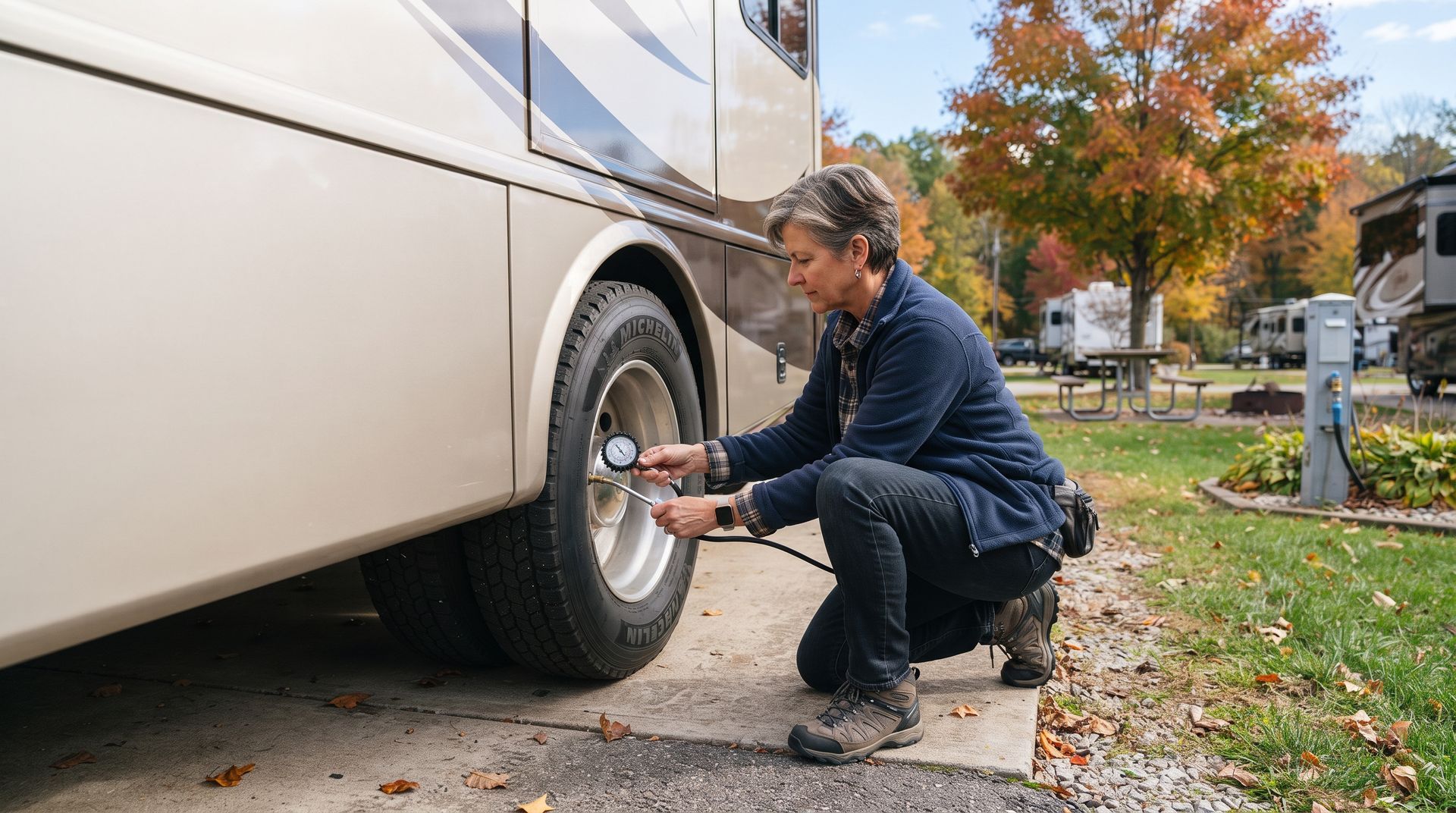
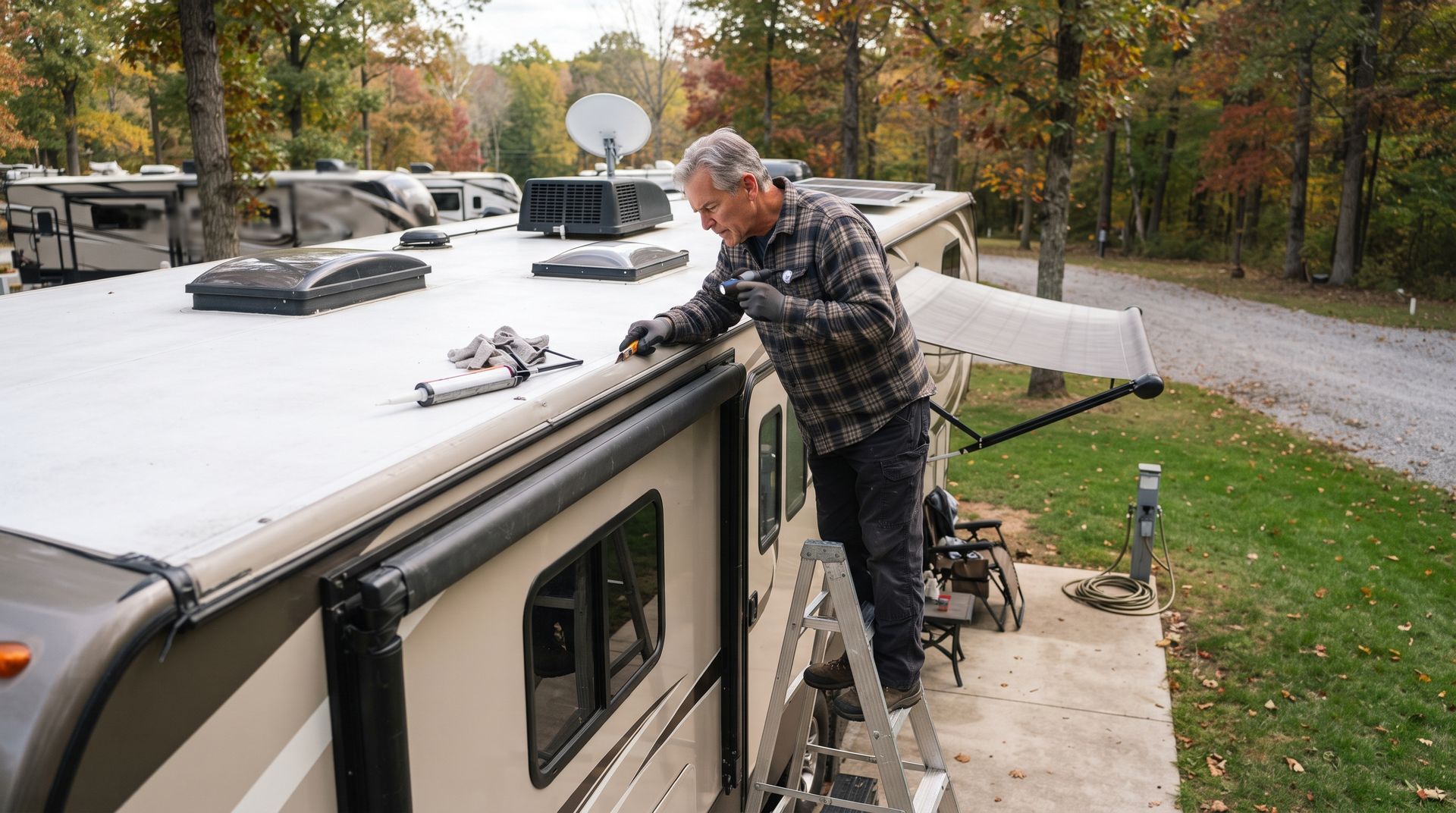
A rig used occasionally can get away with deferred maintenance in a way a rig lived in daily for months cannot. Before settling in for the season, get ahead of any repairs you have been putting off, check seals and weatherstripping with the assumption they need to hold up through real winter weather rather than just a cold snap, and make sure your battery setup and any backup power plan can handle shorter days and more indoor electronics use. It is also worth taking a look at your roof before the season starts, since a small seal issue is far easier to catch and fix in mild weather than after weeks of freeze and thaw have had a chance to work on it. Check your tire pressure with cold weather in mind as well, since air pressure drops as temperatures fall, and a tire that looked fine in October can be noticeably underinflated by the time a real cold snap arrives. If you use your awning at all during the season, get in the habit of retracting it before any snow or heavy wind is expected, since it is one of the easier things to forget once you have settled into a routine.
A Site Built for a Full Winter Season
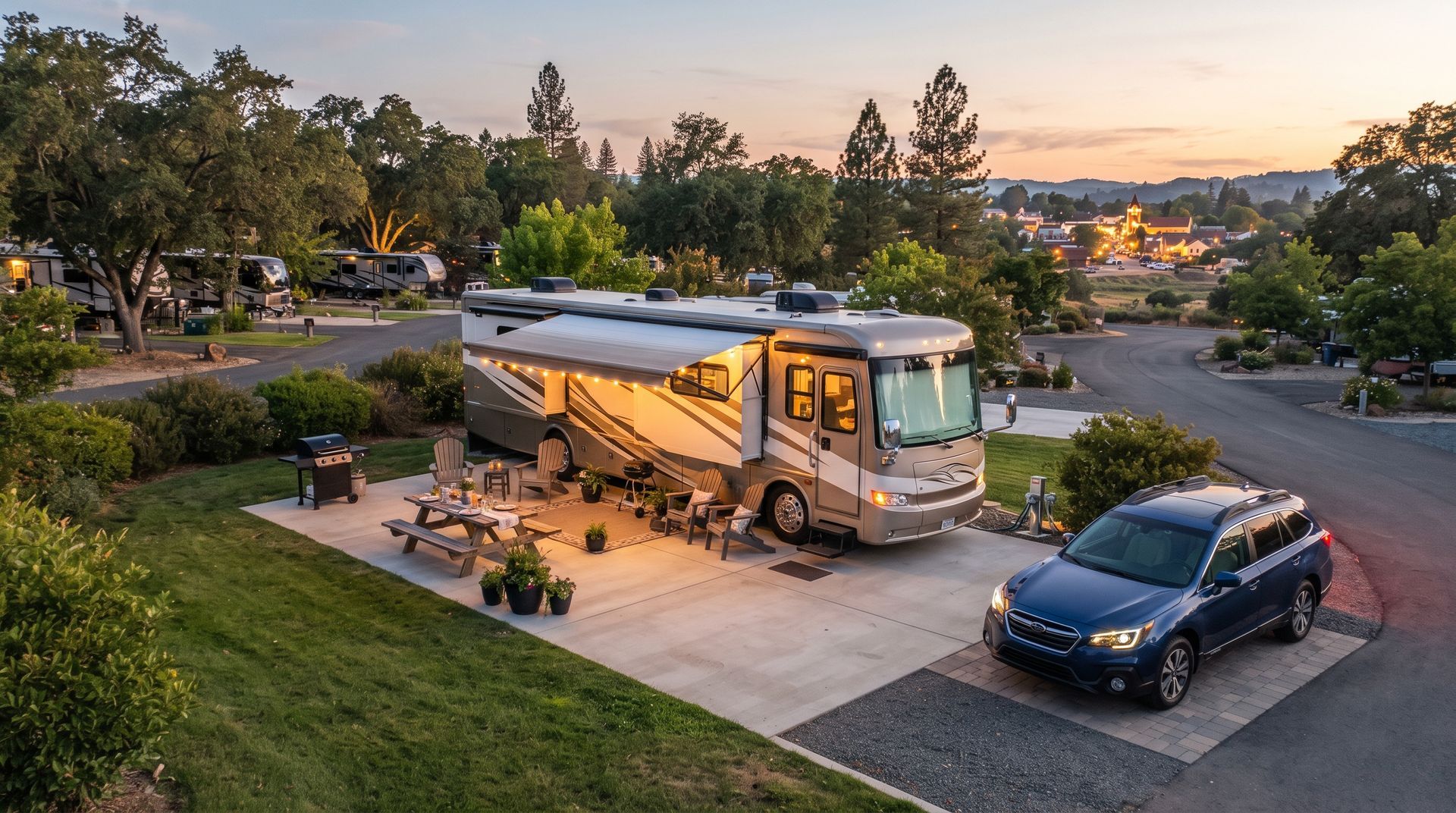
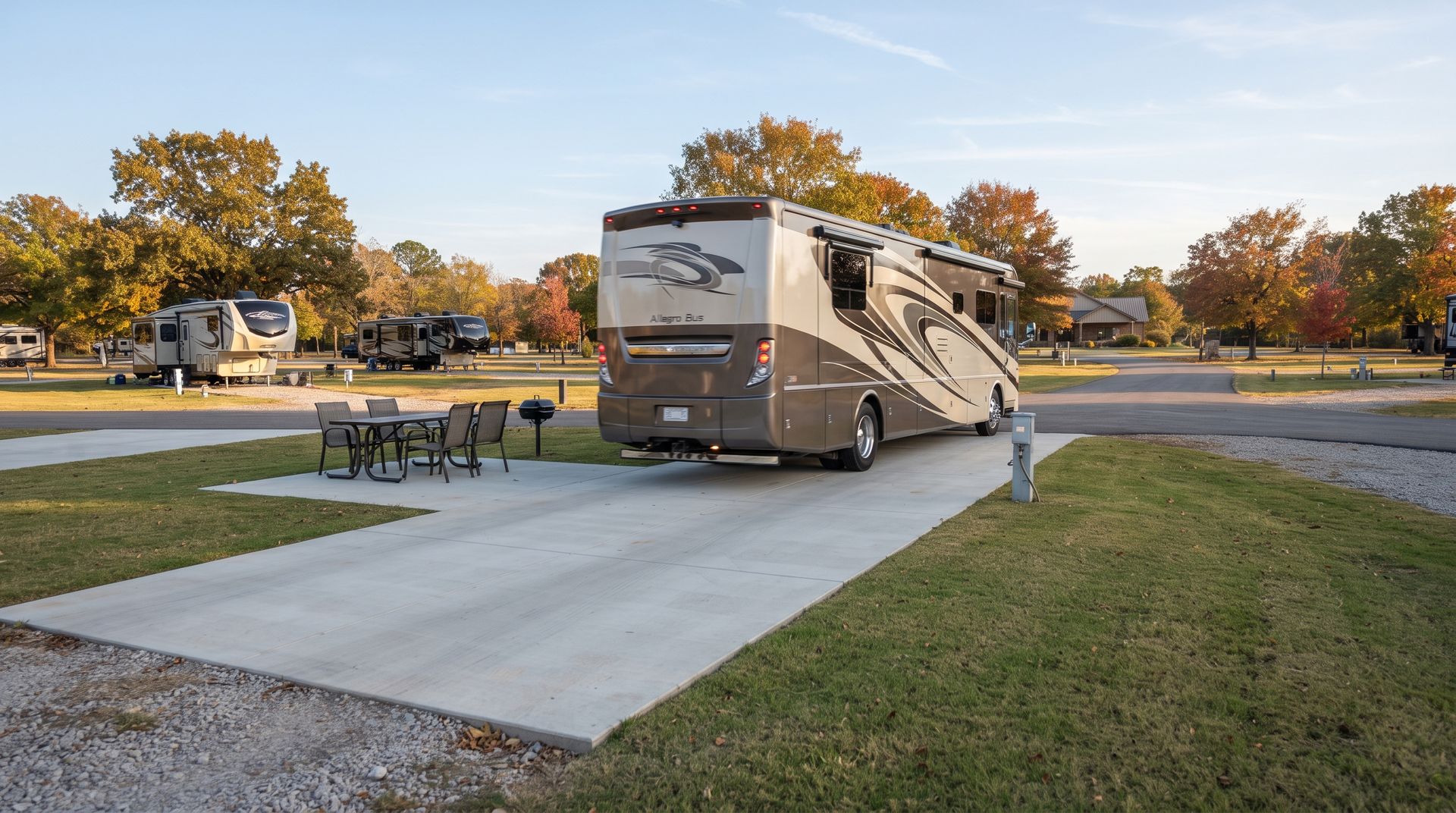
Settling in for the whole season is a lot easier when your site is already built for it. At Hilltop, our 79 sites sit on oversized 14 by 60 foot concrete pads, so your rig stays stable through the entire winter without the releveling issues that come with lesser pads. Full hookups on both 30 and 50-amp service keep your water and power reliable for months at a time, utilities are included in your site rate so there is no separate bill to track through the season, and our management team lives on site year-round, so help is never far off if something comes up mid-winter.
Lock In Your Season Now
The best time to plan a full winter season is before the first real cold snap forces the decision. Call
580-745-9180 or email
officehilltop25@gmail.com, or book directly through the CampLife platform, to reserve your spot at Hilltop RV Resort for the season ahead.